Blog · 16 April 2026 · 1 min read
Does more traffic mean more affiliate links? I checked over 3.6 million affiliate websites to find out
Column-wise percentages of traffic XS–XL bands by outbound affiliate link size. Link volume and visits move together, but the overlap is messy.
affiliate marketing · outbound links · segmentation · data · Breezy
Does more traffic mean more affiliate links? I checked over 3.6 million affiliate websites to find out.
Each publisher was bucketed into t-shirt sizes, XS through XL, for both monthly visits and outbound affiliate links.
How to read the table: pick a link size column — the percentages show what share of those publishers are XS, S, M, L, or XL by website traffic.
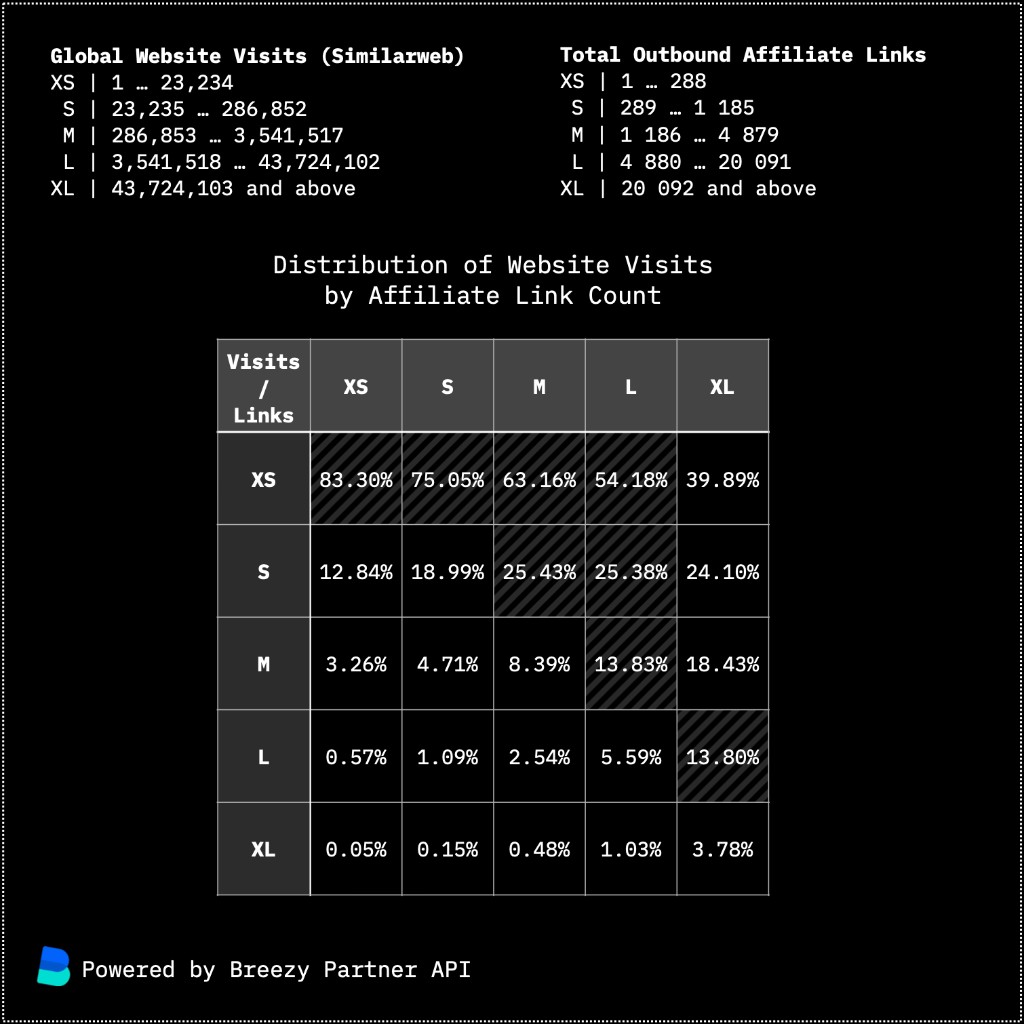
Among publishers with the fewest affiliate links, 83% are small-traffic sites. No surprises there. But look at the other end. Among the heaviest affiliate operators in the XL band, 20,000+ links, 40% are small sites too. The rest are spread across medium, large, and the biggest properties on the web.
As affiliate link volume grows, traffic usually grows too. But the overlap is not clean. Even in the biggest link bucket, 4 out of 10 are still tiny by traffic. These are niche operators or link farms with huge outbound affiliate link volumes and a relatively limited audience.
My main takeaway is: if you assess partners on traffic only, or on link volume only, you miss half the signal.